
What Do Birds Have to Do with Dryer Vents?

● In Virginia’s climate and wildlife conditions, birds seeking a “nice, secure place” to build their nest, often discover that a high-off-the-ground, open, or inadequately protected, dryer vent termination is an ideal location.
● Many of these nests are substantial! The initial nest is typically just inside the vent opening; however, when the homeowner turns the dryer on, the hot, moving air is disturbing to the new tenants, and, instead of leaving they will build a solid “dam” of nesting material, completely filling the vent pipe, as far in as 7 or 8 feet!
● A nest will reduce or completely stop proper airflow and increase lint buildup; often causing moisture to accumulate and pool in the pipe, sometimes leaking through joints to stain a ceiling.
● With the reduced airflow the dryer will not be able to expel the hot air and will start to overheat, potentially resulting in a devastating dryer fire!
● A “bird-proof” vent opening is a small upgrade that protects the vent system, improves dryer performance, and helps avoid costly repairs.
Most Virginia homeowners don’t realize how attractive their dryer vents are until nesting season hits. The realization usually comes later, when everyday routines start to feel slightly off. A dryer that suddenly takes twice as long to do it’s job. A strange smell. Scratching sounds inside the wall. Or worse, a vent fire no one saw coming. In Virginia, where seasonal changes, wildlife activity, and older housing stock often intersect, unprotected dryer vents quietly become entry points for birds, debris, and moisture. Here is why stopping those birds are essential for Virginia homeowners, and why addressing this small exterior detail can prevent much larger problems down the line.
1. Virginia’s Environment Makes Dryer Vents a Prime Target
In Virginia, due to the environment in which homes are situated, climate, wildlife patterns, and construction styles all combine to create ideal conditions for vent intrusion.
a) Birds Actively Seek Warm, Sheltered Nesting Spots
Virginia is home to a wide variety of birds that nest multiple times a year. Dryer vents offer exactly what nesting birds want, which is a dry location, protection from predators, and a quiet opening that often goes unnoticed.
Once a bird enters a vent, nesting material quickly follows. Twigs, grass, feathers, and debris accumulate fast, especially during spring and early summer. These materials don’t just block airflow; they trap lint, moisture, and heat inside the vent line.
It is necessary to allow exhaust air to exit, while preventing animals from entering. You don’t want the vent to become an invitation to critters, but simply an exit point for hot/moist air.
b) Many Virginia Homes Use Older Vent Designs
A significant number of Virginia homes were built with basic vent hoods or open exhaust ports that no longer meet modern safety expectations. These older designs often lack any mechanism to prevent entry from birds or rodents.
Even vents with simple flaps can fail over time. Hinges rust, flaps stick open, or break entirely. Once that happens, the vent becomes permanently exposed. Even with standard, undamaged louvered covers, birds have been observed opening the louver with it’s beak, for entry!
c) Multi-Story and Roofline Vents Are Harder to Monitor
Many Virginia homes vent dryers through upper walls or rooflines. These locations are difficult for homeowners to inspect regularly, which allows nesting or blockage issues to go unnoticed longer.
By the time a problem becomes obvious inside the home, airflow may already be severely restricted. Proper bird protection prevents issues from starting in the first place, reducing reliance on visual monitoring in hard-to-reach areas.
d) Wildlife Problems Rarely Stay Isolated
Birds don’t nest alone for long. Once a vent becomes a known access point, other animals may attempt entry. Rodents, insects, and even squirrels are attracted to vents that show signs of activity or warmth.
Over the years our technicians have encountered snakes in dryer vents that were drawn there by the prospect of fresh bird eggs!
2. Vents Blocked by Nesting Material Increase Fire Risk

Lint is highly flammable. When airflow is restricted by nesting material or debris, lint accumulates faster and dries more slowly inside the vent line. Heat builds up where it shouldn’t. Many fires are linked to airflow restrictions that could have been prevented with bird protection.
This is why dryer vent safety experts consistently emphasize vent protection as part of fire prevention, not just maintenance.
a) Dryers Work Harder When Airflow Is Restricted
A dryer is designed to push moist air out efficiently. When that path is blocked, the appliance compensates by running longer and hotter.
Clothes take more cycles to dry. Energy usage increases. Internal components wear out faster. Over time, the cost of higher utility bills and premature appliance replacement adds up.
A properly protected vent helps maintain airflow so the dryer can operate as designed, not strained against an avoidable obstruction.
b) Moisture Gets Trapped Inside the Vent Line
When exhaust can’t exit freely, moisture lingers inside the vent. That moisture can seep into surrounding materials, especially in wall or ceiling runs.
Persistent moisture leads to mold growth, musty odors, and potential damage to drywall or insulation. These issues often get blamed on humidity when the real cause is vent restriction. Keeping vents clear protects not just the dryer, but the home itself.
c) Warning Signs Often Appear Late
Homeowners rarely notice vent problems immediately. By the time clothes feel unusually hot, drying times double, or a burning smell appears, the blockage is often significant.
3. A Small Upgrade with Long-Term Impact
a) Various Vent Covers are Not Equal
Many homeowners assume their vent is protected because something is installed over the opening. In reality, decorative hoods or plastic covers often fail to block entry.
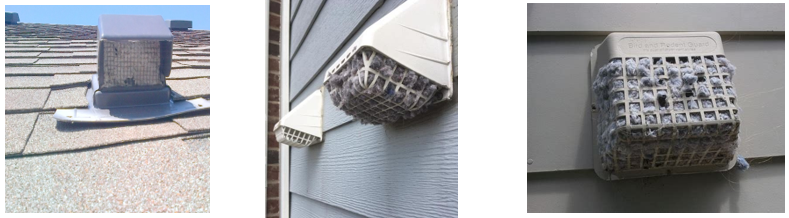
Most of the traditional, most common guards do prevent entry of the birds, however, as codes have changed, they are not allowed now by more and more building departments/jurisdictions. The reason is that they easily fill up with lint, causing a blockage, and overheat the dryer.
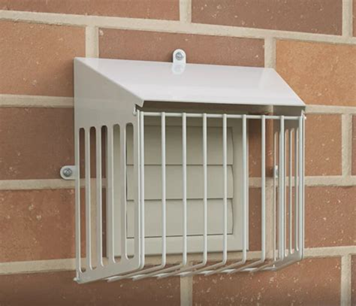
One of the few guards that are still accepted by most building departments are designed with vertical bars (not grids), that allow exhaust to exit with minimal lint buildup, while physically preventing animals from entering.
This would be the type to use if you want to cover an existing, properly working vent cover. .
b) Our Choice for Best Cover on the Market – No Grid to Clog with Lint, Yet Designed to Deter Birds!
This premium grade vent termination offers durable construction & fine exterior aesthetics: 22 ga. galvanized and powder coated steel with a lighter damper, creating zero airflow restriction AND deters birds and other pests. This vent cover replacement addresses both issues.

c) Proper Installation Matters as Much as the Guard Itself
Even the best guard can fail if installed incorrectly. Improper spacing, poor attachment, or misalignment can restrict airflow or create new gaps. Professional installation ensures the guard fits the vent type, location, and airflow requirements of the home.
d) Maintenance Becomes Easier and Less Frequent
A properly guarded vent still requires occasional cleaning, but less often than an unprotected one. By stopping nests and debris at the exterior, the buildup inside the duct is dramatically reduced.
This makes routine maintenance simpler, faster, and more predictable. It also lowers the likelihood of emergency cleanings triggered by sudden blockages.
e) The Upgrade Pays for Itself over Time
When you factor in energy savings, reduced repair risk, and avoided damage, proper bird protectiom quickly becomes cost-effective.
Instead of reacting to problems, homeowners invest once and benefit for years. This is especially valuable in Virginia homes where wildlife pressure and humidity are ongoing concerns.
f) Peace of Mind Comes from Knowing the Vent Is Protected
There’s a quiet confidence that comes from knowing a hidden system is functioning properly. Homeowners don’t have to worry about what’s happening inside walls or ducts they can’t see.
When Prevention Is the Smarter Choice
Some home upgrades are about comfort. Others are about avoiding regret. Protecting a dryer vent falls firmly in the second category. They are one of those quiet systems that either work seamlessly for years or slowly turn into a source of frustration, inefficiency, and risk. When small access points are handled correctly, the rest of the system works the way it’s supposed to, without stress or surprise repairs. It’s a quiet decision that pays off every time the dryer runs.
CleanVent Dryer Exhaust Specialists helps Virginia homeowners protect their dryer vents with solutions designed for safety, performance, and long-term reliability. Get in touch to schedule an inspection or discuss the right bird guard solution for your home before small issues turn into costly repairs.


Comments